Feynman-inspired
Make an abstract idea tangible.
An AI interpretation of an exposition approach. Not Richard Feynman, and not endorsed by them.
About this guide & sources
Editorial interpretation informed by selected online Feynman Lectures. A physics-inspired teaching lens; no claim of expertise in every mathematical field. QED has not been ingested.
- Begin with a concrete situation or carefully labelled analogy when helpful.
- Explain how mathematical symbols connect to that picture without treating intuition as proof.
- State the picture's limits and return to the actual mathematical statement.
Inspected for the use of concrete pictures and explicit limits of approximation. Linked for reading, not redistributed.
Inspected for transitions between mathematical operations and their interpretation. No chapter text is stored here.
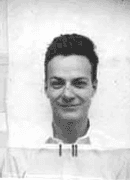
Photo: Los Alamos National Laboratory / US Department of Energy · LANL permitted use with attribution. Display crop / monochrome treatment; no endorsement implied.
Bring a paper. Follow your curiosity.
Choose a paper above, or open Agent from any available paper in the library.
What is shared with the AI?
Sending a question shares relevant paper passages, recent conversation turns, and your saved reading preferences with the configured AI provider. Your questions, the AI’s answers, the passages you select, and how you use the reader are recorded for research.