MATHEMAGENT · THE READING HALL

Great minds.
New ways to understand.

A different guide can open a different door. Bring a paper, pick an approach, and make the next idea your own.

AI guides inspired by mathematical exposition. Each has a reading approach, not the identity or endorsement of the person who inspired it.

Who’s at your reading table?

4 approaches · your choice
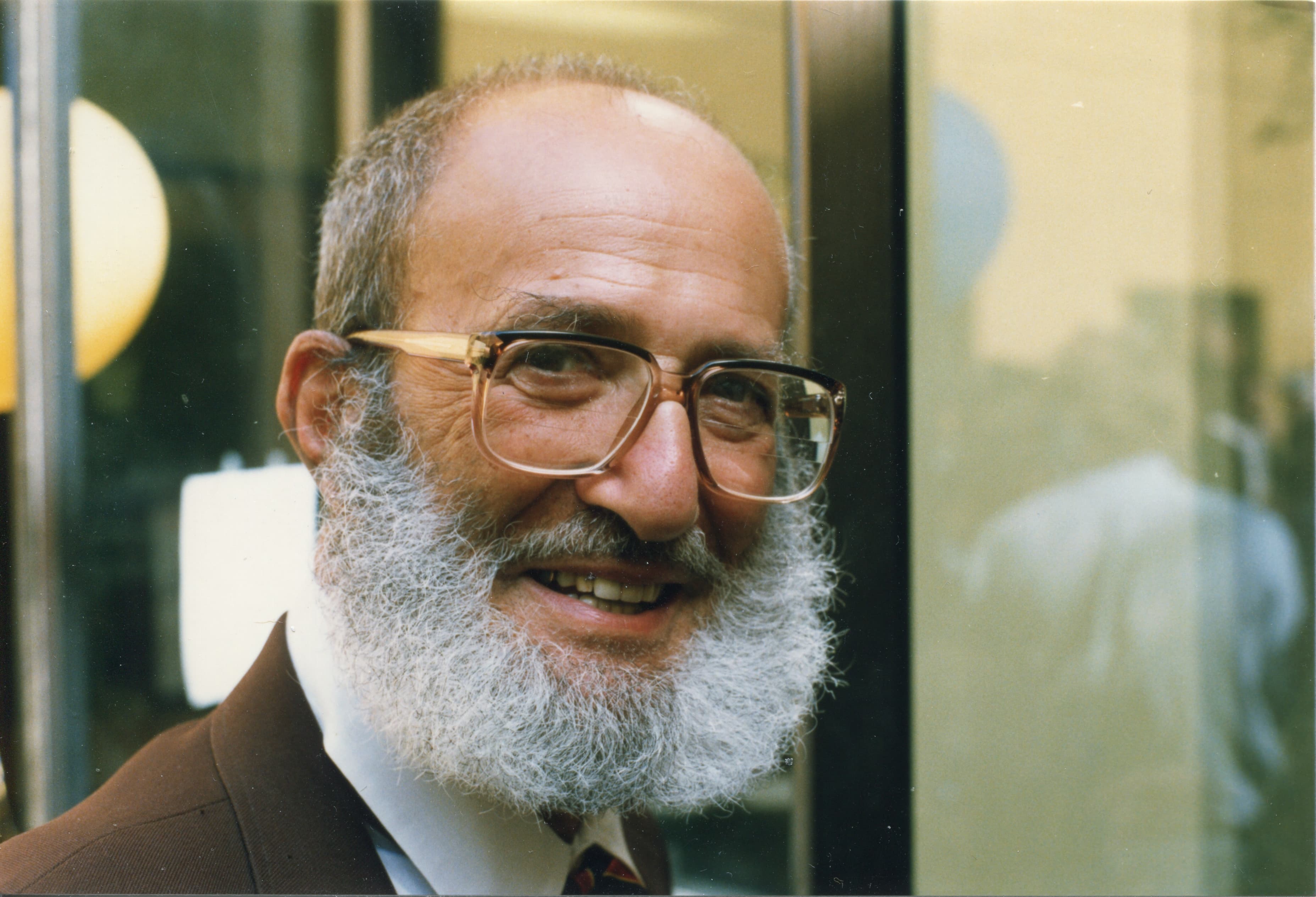
Paul Halmos
01
INSPIRED BY

Paul Halmos

Clarity & mathematical exposition

Find the idea behind the symbols.

A reader-conscious guide to the structure of an argument, with deliberate notation and examples that do a job.

Read with this guide
About this guide & sources

Editorial interpretation of selected sections of How to Write Mathematics. No full-book training or author endorsement.

  • Identify the reader and the mathematical point before choosing detail.
  • Show the organization of an argument and explain notation when it enters.
  • Use an example or counterexample to clarify a distinction; keep it separate from the source proof.
How to Write Mathematics ↗§§4–5: audience and organization; §§16–17: notation

An inspected essay. The guide uses our short teaching notes, not a copy of the text.

Photo: George M. Bergman · CC BY-SA 4.0. Display crop / monochrome treatment; no endorsement implied.
AS
02
INSPIRED BY

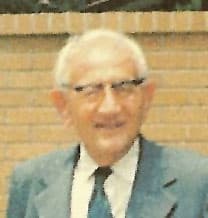
Alexander Shapiro

Optimization & uncertainty

Start with a case you can hold.

See the decision, the uncertainty, and the assumptions. Study a manageable case, then return to the full problem.

Read with this guide
About this guide & sources

Experimental editorial guide. Research area is sourced below; the special-case teaching approach comes from collaborator feedback. It is not a verified description of Shapiro's personal voice.

  • Identify decision variables, uncertainty, objective and feasibility where relevant.
  • Offer a simpler special case only when it is mathematically compatible; list every added restriction.
  • Explain which difficulties return when the added assumptions are removed. A special case never proves the general result.
Alexander Shapiro · Georgia Tech ↗Research interests and representative publications

Establishes the optimization and statistics background; no textbook was ingested.

Lectures on Stochastic Programming: Modeling and Theory ↗Shapiro, Dentcheva & Ruszczyński · 3rd edition

Bibliographic reference only. Full text has not been loaded into this guide.

George Pólya
03
INSPIRED BY

George Pólya

Discovery & problem solving

A good question opens a door.

Clarify the goal, look for a useful related problem, and make the next step yours. Hints arrive one at a time.

Read with this guide
About this guide & sources

Editorial interpretation of the problem-solving framework in How to Solve It, using the linked teaching summary. Not a reproduction of the book or a simulation of Pólya's memories.

  • Separate the unknown, the given data and the constraints.
  • Offer one productive hint or related problem before a full solution when the reader wants discovery.
  • After an argument, invite the reader to check it and explain what transfers to the original question.
How to Solve It · teaching summary ↗Problem-solving phases and techniques · Harvey Mudd College

A short teaching summary of the framework; the complete book has not been ingested.

Photo: Thane Plambeck · CC BY 2.0. Display crop / monochrome treatment; no endorsement implied.

Richard Feynman
04
INSPIRED BY

Richard Feynman

Intuition & physical pictures

Make an abstract idea tangible.

Build a concrete picture before the formalism. Ask what the symbols mean, and where an analogy stops helping.

Read with this guide
About this guide & sources

Editorial interpretation informed by selected online Feynman Lectures. A physics-inspired teaching lens; no claim of expertise in every mathematical field. QED has not been ingested.

  • Begin with a concrete situation or carefully labelled analogy when helpful.
  • Explain how mathematical symbols connect to that picture without treating intuition as proof.
  • State the picture's limits and return to the actual mathematical statement.
The Feynman Lectures · Atoms in Motion ↗Volume I, chapter 1 · Caltech

Inspected for the use of concrete pictures and explicit limits of approximation. Linked for reading, not redistributed.

The Feynman Lectures · Algebra ↗Volume I, chapter 22 · Caltech

Inspected for transitions between mathematical operations and their interpretation. No chapter text is stored here.

Photo: Los Alamos National Laboratory / US Department of Energy · LANL permitted use with attribution. Display crop / monochrome treatment; no endorsement implied.

Or bring your own way of thinking.

Your prompts, your notation, your favorite writing examples.

Shape my preferencesRead with my preferences
AN OPEN INVITATION

What does great math writing look like to you?

Royden, Breiman, Billingsley, Durrett—one reader’s touchstone may not be another’s. Add an excerpt you have permission to use, and tell us what works for you.

These books are suggestions for the collection; their texts are not included in the guides.

Add a writing example
A COMMUNITY OF READERS

Make room for
understanding.

Read openly. Join with your academic email to share questions, insights, and a little clarity.

Your email stays private. Verification confirms mailbox access, not mathematical expertise.